Two hikers set out to walk from Mexico to Canada. What carried them wasn’t an achievement mark, but the discipline of showing up, day after day.
Conservationist and Photographer Christopher spent extended days crossing the High Plains with a film camera documenting grassland ecosystem..
After a stalled plan to chase waves in Australia, Aleks used backpacking through Thailand and Mexico to reimagine nature, commit to long-term travel and turn photography into a way of seeing the world.
5 min read
TRENDING
%20(1).png)
Seven Volcanoes, One Explorer
Adventure
TRAVEL


Trails
Small Towns

Best 10 Spots For Your Summer Road Trip
Travel
Hike
Water Adventures

EDITOR'S CHOICE
TRAVEL
PUBLISHED RECENTLY


Beyond the Beaten Path


Ramps, Rails & Really Good Vibes


What You Should Know Before Hitting Flagstaff, Burlington, Madison, and Portland

From Instagram-perfect trails to real-life survival, outdoor pros reveal the gear that turns every backpacking trip from chaos to epic...
FAVORITES
PUBLISHED RECENTLY
In the Alberta wilderness, one woman is turning solo hikes into a community where connection, confidence, and courage grow with every step.
First Woman to Hike from Border to Border
Hiking


Camp, Hike, Repeat: Outdoor Spots That Make You Stay Longer


Beyond the Beaten Path


On Trails with Horses- A Rider's Experience
Revolutionize
Your Communication Capabilities

Describe the service and how customers or clients can benefit from it. This is the place to add a short description with relevant details, like pricing, duration and how to book.

Language Translation
Describe the service and how customers or clients can benefit from it. This is the place to add a short description with relevant details, like pricing, duration and how to book.

Chatbots
Describe the service and how customers or clients can benefit from it. This is the place to add a short description with relevant details, like pricing, duration and how to book.

Sentiment Analysis


Camp, Hike, Repeat: Outdoor Spots That Make You Stay Longer


Beyond the Beaten Path


Rail Trails Surge in Popularity Across the U.S.
TOP READS.
LATEST READS


Camp, Hike, Repeat: Outdoor Spots That Make You Stay Longer


Beyond the Beaten Path


Rail Trails Surge in Popularity Across the U.S.


On Trails with Horses- A Rider's Experience


Check Out The Fall 2025 Issue
ADVERTISEMENT


.jpg)
featured posts
Backpacking
3 min read
Hiking
3 min read
Outdoor Travel
3 min read
Explore
3 min read


Summer 2026 Issue On Sale June 16 — Available in Bookstores Nationwide


Camp, Hike, Repeat: Outdoor Spots That Make You Stay Longer


Beyond the Beaten Path


Rail Trails Surge in Popularity Across the U.S.


On Trails with Horses- A Rider's Experience


Ramps, Rails & Really Good Vibes


Experts Weigh In: Backpacking Gear That Actually Makes Your Hike Less Brutal


Pack Smarter, Camp Better


Hiking & Backpacking Gear 101: The Stuff You Actually Need


National Park Energy: The Dos, The Don’ts, and How Not to Be “That Person”


Two Feet, Four Paws: Backpacking New Mexico
HIKING
Janine Dersch turned a response to fear into a growing network of women-led hiking and outdoor groups.
ADVENTURE
BACKPACKING
Aleks turned backpacking through Thailand and Mexico into a new way of seeing the world through photography.
ADVENTURE
Raised below sea level in the Netherlands, former Royal Dutch Navy sailor Ricardo Kaljouw now climbs the world’s highest volcanoes.
HIKING
TRAILS
EXPLORE
Ali and Noah brought daily discipline to the Pacific Crest Trail, hiking from Mexico to Canada.
This story explores Prince Edward Island’s hidden gravel roads, far beyond the popular Confederation Trail.
Conservationist and photographer Christopher spends days on the High Plains documenting grassland ecosystems.
LATEST
READS
.png)
.png)

)
Backcountry camping, guided wilderness treks, and multi-day hikes have surged in popularity, as Americans chase experiences that challenge both body and mind. The National Park Service reports that backcountry permits at parks like Yosemite and Grand Teton are in high demand, reflecting a growing desire to reconnect with nature on a more intimate scale. (nps.gov
)
Wildlife sightings, untouched waterways, and geological wonders provide not just recreation but also storytelling opportunities. Outdoor educators and tour guides emphasize that these journeys foster deeper appreciation for conservation, with travelers learning firsthand the delicate balance of ecosystems in remote areas. (audubon.org
)
From uncharted trails to ancient forests, America’s untamed landscapes are calling more travelers than ever. For those willing to venture where paths are unknown, every step becomes a story — a living memory of the natural world at its rawest and most inspiring.

)
Evening treks and overnight backcountry excursions have grown in popularity, as travelers chase the quiet majesty of fading daylight over untouched peaks. National Park Service data shows rising backcountry permit requests, particularly in parks known for steep ridges and remote trails like Glacier National Park and Grand Teton National Park, reflecting a renewed interest in immersive wilderness experiences. (nps.gov
)
Wildlife encounters, alpine vistas, and the challenge of navigating unmarked terrain underscore the allure of these journeys. Outdoor guides emphasize preparation and safety, noting that venturing into remote regions demands respect for nature’s unpredictability. (recreation.gov
)
For those willing to follow the fading light over rugged peaks, every step becomes both a test and a reward — a direct connection to the wild heart of America’s landscapes and the timeless rhythm of nature.

)
National Park Service data shows that backcountry camping permits are on the rise in iconic parks such as Yosemite, Grand Teton, and Glacier, reflecting growing interest in immersive wilderness experiences. Campers are drawn to these sites for hiking, wildlife observation, and the chance to witness sunrises and sunsets from elevated vantage points. (nps.gov
)
Beyond the well-known peaks, lesser-traveled areas like the Bitterroot Mountains in Montana and the White Mountains of New Hampshire offer pristine backcountry sites, perfect for multi-day treks. Experts advise careful planning, Leave No Trace practices, and awareness of wildlife to ensure both safety and the preservation of these natural areas. (recreation.gov
)
Whether scaling rugged summits or following winding forest trails, these backcountry spots provide the ultimate outdoor experience — where every campsite becomes a base for exploration and every trail step tells a story of adventure in America’s wild landscapes.

For most people, Tuesday is mundane — coffee, emails, maybe a quick lunch. Not for Ethan Miller, a 32-year-old outdoor enthusiast who decided that his Tuesday would include something a bit… wetter. By mid-morning, he was standing at the edge of Horseshoe Falls in Colorado, harness secured, helmet tight, and a rope anchored above the roaring cascade.
“I’ve rappelled before,” Miller said, grinning nervously, “but nothing prepares you for a waterfall hitting you full force. It’s like nature yelling, ‘Welcome!’” With a practiced push, he leaned back into the abyss. Water pelted his helmet, spray soaked his gear, and the sheer force of the fall made the rope hum in his hands. Every second was a mix of adrenaline, focus, and awe.
Halfway down, Miller paused on a ledge to catch his breath and take in the view: mossy cliffs, crystal-clear water tumbling into a pool below, and sunlight refracting through mist like diamonds. “You feel alive in a way nothing else gives,” he said.
Twenty minutes later, Miller landed in the pool at the base, dripping, exhilarated, and already planning his next descent. For him, Tuesday wasn’t just a day on the calendar — it was a reminder that adventure waits where fear meets courage, and sometimes all you need is a rope, a waterfall, and zero chill.

Within minutes, a curious white-tailed deer emerged from the nearby woods and cautiously approached. One treat became two, and soon a small group of deer began lingering every day, waiting for their next snack. Neighbors report seeing the gentle animals peeking through fences and even grazing right near front porches.
“I wake up, and there they are — like clockwork,” Bennett said. “It’s honestly a little surreal. I never thought my apples would turn me into the neighborhood deer guy.” Wildlife experts caution against overfeeding wild animals but say that such interactions are harmless when treats are occasional and healthy, like fruits or veggies. (wildlife.org
)
Now, Bennett’s yard is part deer hangout, part community spectacle. Kids wave from the sidewalk, neighbors snap photos, and Bennett jokes that he’s started keeping extra snacks on hand just to keep his new friends happy. “I guess I’ve got a whole new morning routine,” he said — apples in hand, and deer at the ready.
EXPLORE
REMOTE

Officials say the increase represents a sustained trend of Americans and international visitors choosing scenic landscapes and outdoor experiences over crowded urban destinations. Visitation grew roughly 2 percent from 2023, adding more than 6 million additional park visits across the country.
Popular parks such as Yellowstone, the Grand Canyon and Yosemite continue to anchor the surge, with families, young travelers and retirees embracing hiking, camping and wildlife viewing. Tourism spending tied to these visits also supports local economies in gateway communities.
Industry travel data shows a sharp spike in searches and bookings for stays near national parks, driven in part by a desire to disconnect from screens and reconnect with nature.
As interest in outdoor recreation grows, America’s national parks remain a symbol of natural heritage and a go‑to destination for travelers seeking wide open spaces and unforgettable experiences.

It’s adventure with purpose
The collection hits all the must-have bases for the modern adventurer.
“This collab is about connecting people with places that spark adventure,” stated in a recent press release John Michael Fabrizi, President of Coalatree. “Greater Zion has always matched the outdoor spirit we champion, and these products are built for trips and everyday adventures alike.”
Natalie Britt, CEO of Zion Forever Project, stated in a recent press release, “We’re thrilled to see this partnership support our mission to conserve and enhance public lands for everyone — now and in the future.”
The Greater Zion Coalatree Collection is available now exclusively at Coalatree.com. Whether you’re hitting the trails, the canyons, or just want a daily reminder of those red-rock adventures, this gear has you covered — and gives back while you do it.
About Greater Zion
Covering 2,400 square miles in southwest Utah, Greater Zion includes Zion National Park, four state parks, 14 golf courses, and endless outdoor adventures. Learn more at GreaterZion.com.
About Coalatree
Utah-based Coalatree makes sustainable gear and apparel for adventurers everywhere. Using recycled materials and giveback initiatives, they design functional, stylish products for the outdoors and everyday life. Learn more at Coalatree.com.
About Zion Forever Project
The official nonprofit partner of Zion National Park, the Zion Forever Project funds conservation, education, and sustainability projects to protect the park’s landscapes and inspire stewardship. Visit ZionPark.org.
For more, visit https://coalatree.com/

Building on the content found in the annual Official Guide to the Susquehanna River Valley, the Outdoor Recreation Guide takes a deeper dive into the area’s diverse recreational offerings. Readers will find answers to questions such as: Which regional waterways are best for paddling? Why is the area becoming a hotspot for off-roading enthusiasts? Where are the best home bases for outdoor adventures in the river valley? These insights and more are featured throughout the guide’s pages.
The Susquehanna River Valley is truly an outdoor lover’s paradise
“Each year, we see more visitors seeking outdoor adventures, and our region offers an ideal mix of scenic beauty, challenging terrain and a wide variety of exceptional outdoor experiences," said Judy Machesic, Interim Director of the Susquehanna River Valley Visitors Bureau (SRVVB).
Machesic noted that the region continues to earn national recognition for its outdoor recreation assets. Penns Creek is celebrated as an award-winning trout stream, while the Susquehanna River itself is a bucket-list destination for anglers nationwide. Faylor Lake has been ranked the #14 disc golf course in the world, and attractions such as the Anthracite Outdoor Adventure Area (AOAA) in Coal Township and the unPAved of the Susquehanna River Valley gravel cycling race in Union and Snyder counties draw riders from across the country.
“The Outdoor Recreation Guide is a valuable resource for both visitors and residents,” Machesic added. “Whether you’re an avid adventurer or simply looking to spend more time outdoors, this guide will help point you in the right direction.”
For more information about the new guide or about outdoor adventures in the region, visit VisitCentralPA.org or contact the Susquehanna River Valley Visitors Bureau at 570-524-7234.
Free copies of the Susquehanna River Valley Outdoor Recreation Guide are available at the SRVVB office, 2733 State Route 45, Suite 2, Milton; at literature racks throughout the region; and online.

With just 6,000 residents spread across 700 square miles, it’s a tight-knit, backwoods community that feels like a true slice of Appalachia.
Annie Humes, executive director of the Pendleton County Convention & Visitors Bureau, describes the county as having “an almost classic pioneer spirit. There's a personality here… it’s very close-knit,” reflecting a community where people know each other and newcomers are welcomed.
The largest difference between the highest point and lowest point in the West Virginia Appalachian range
The county stands out for its dramatic geography. Humes points out that Pendleton has “the largest difference between the highest point and lowest point” in the West Virginia Appalachian range, creating deep valleys and high ridges that attract adventurers seeking serious outdoor challenges.
There are a few must-see spots for visitors. Spruce Knob, the highest mountain in West Virginia, sits within the Spruce Knobs-Seneca Rocks Recreation Area inside the Monongahela National Forest. A lookout tower at the summit offers sweeping vistas, making it a natural destination for hikers and photographers.
Courtesy of Pendleton County CVB
Seneca Rocks is another highlight. Humes explains, “Seneca Rocks is the premier East Coast climbing location. You have people who are based on the East Coast and are world-class rock climbers. Seneca Rocks is where they come if they can only get away for a day or a weekend.” Guided climbing options at the base also make it accessible for beginners.
Seneca Rocks is the premier East Coast climbing location. You have people who are based on the East Coast and are world-class rock climbers.
Nearby Nelson Rocks features NROCKS Outdoor Adventures, which offers zipline canopy tours, Via Ferrata routes, hiking and a wooden cable bridge between two rock formations. Humes says it’s “a spectacular place” and mentions that lodges are available for those who want to stay overnight.
For backpackers, Pendleton County is home to one end of the North Fork Mountain Trail. The 26-mile trail is mountain-bike friendly and can also be completed as a two-day backpacking trip.
@seewestvirginia on Youtube
Fishing is another major draw. The county includes the headwaters of the Potomac River and offers excellent trout fishing, especially in spring and fall. Humes adds that the town of Franklin hosts the annual West Virginia Trout Fest, celebrating the area’s fishing heritage.
For scenic drives, Humes recommends Snowy Mountain Road, a backroad that winds along lower ridges leading up to Spruce Knob. She says it features “beautiful rock formations and farmland all the way along” and is one of her personal favorites.
Pack your gear, hit the trail and enjoy it. Pendleton isn’t going anywhere.
To plan your trip to Pendleton County, WV visit, https://www.pendletoncountywv.com/ or click their logo below.

Scenic destinations throughout the Ozarks region are seeing a notable uptick in visitors as travelers increasingly seek natural beauty, outdoor recreation and rustic charm, according to economic and parks data. In southeast Missouri, more than **1.29 million people visited Ozark National Scenic Riverways in 2022, contributing roughly $63.8 million in local spending and supporting nearly 873 jobs in surrounding communities.
The Riverways — known for the Current and Jacks Fork Rivers’ clear waters and miles of forested landscape — remain a major draw for canoeing, fishing, hiking and nature tours, underscoring the Ozarks’ growing appeal as an outdoor destination.
Across the broader region, the tourism economy extends into both Missouri and Arkansas, with the latter reporting more than 52 million visitors state‑wide in 2024 and a total tourism economic impact of $17.4 billion, according to state tourism reports.
Attractions such as floating the rivers, hiking miles of trails like the Ozark Highlands, scenic lakes and small‑town hospitality are driving demand as Americans prioritize nature‑based travel. With investments in resort development and recreation infrastructure underway, local officials say they expect continued growth in visitor numbers and economic benefits for Ozarks communities in the years ahead.

According to the U.S. Fish & Wildlife Service, the bald eagle population in the contiguous United States has climbed to an estimated 316,700 individual birds, including more than 71,400 nesting pairs — a dramatic increase from just 417 known nesting pairs in 1963. This rebound ranks among the most significant wildlife conservation successes in U.S. history and has made bald eagle sightings increasingly common from the Pacific Northwest to the East Coast.
Across the country, community science efforts, annual winter surveys and expanded habitat protections have heightened public engagement and awareness. In states like Ohio, reported bald eagle nests have increased sharply in recent years, underscoring the broader positive trend in population growth.
Naturalists and birdwatchers alike are celebrating the birds’ return, noting that opportunities to see bald eagles — from river corridors to wildlife refuges — are more widespread than at any point in decades.

Outdoor towns from the Rockies to river valleys are likewise seeing buzz. Communities such as Bend, Oregon and Bozeman, Montana have become magnets for outdoor lovers thanks to access to trails, rivers and open space that appeal to hikers, bikers, fishermen and remote workers prioritizing lifestyle over big‑city living. Smaller river towns and historic outdoor hubs — places like Asheville, North Carolina, nestled in the Blue Ridge Mountains — blend natural settings with cultural amenities, driving both visitor numbers and local economic growth.
Analysts note a rising trend in “drive‑to” outdoor travel and rural tourism, especially among younger generations seeking authenticity, affordability and nature‑centric experiences. Investments in trails, parks and local tourism infrastructure are helping these towns convert natural beauty into sustained visitor interest year‑round.
From mountain peaks to riverside main streets, America’s outdoor towns are trending as travelers redefine what a memorable getaway looks like in the 2020s.
CAMP
NEWS
SURVIVAL
HIKING

When I’m on horseback, I can catch a glimpse of what it would be like to simply exist in nature.
When I’m in the wilderness on foot, I feel like a guest passing through. I can see the trail as my horse sees it. Lush alpine meadows become sources of sustenance, rushing snowmelt streams are places to stop and rest. Sitting at a higher vantage point, I have more time to take in the terrain around me than when I’m hiking or running, head down and focused on the trail. The natural sounds of my horses’ hooves on the ground and their deep animal breaths blend in with the wild, and I always find more wildlife when I’m riding that I surely would’ve spooked with my clunky human footsteps.
Credit: Lily Kun
Credit: Lily Kun
It’s extra special to be sharing these moments with my personal horses, who I’ve spent years
caring for, training, and building up a relationship with. All the “horse-girl” stereotypes rang true for me as a kid (and still probably do…) If I could go back and tell my second grade self that in my early twenties my important life decisions would revolve around finding a way to afford to own horses, I wouldn’t have been surprised, but I would’ve been excited. I first got interested in long distance trails through endurance riding, an organized competitive sport where horses and riders navigate remote courses ranging from 25-100 miles.
I learned how to gauge horses’ fitness and built my gear kit based on what kept my animals and I comfortable, rather than on a cowboy aesthetic. I prefer to ride in leggings and hiking boots rather than jeans, and my horses have lightweight, durable tack that can withstand the elements and is custom fit to their bodies. I love the freedom that I have on trail to use clothing and gear that actually works for me, rather than being constrained by the tradition that dominates other equestrian sport disciplines.
I’ve loved watching their skill and confidence grow the more time they spend in the backcountry
I move around a lot working as an onsite ranch hand, which is how I’ve had the opportunity to
ride my horses in so many different places in the past couple years, but let me tell you, taking your own horses on trail is NOT as simple as showing up for a guided ride at a dude ranch. One of the most frequent questions I get when I share that I ride long distances on horseback is “What’s the big deal? Aren’t you just sitting there while the horse does all the work?” A fair enough question, if you haven't spent seventeen consecutive hours in the saddle- yes, I’ve done this, and my entire body felt like Jello the day after.
Not only does riding a horse properly engage just about every muscle in your core and legs, being responsible for equines on trail is also a massive mental workout. When I have my horses with me, my risk calculation has to be way more accurate than when I’m alone, because I’m a lot more willing to put myself into sketchy situations than I am to risk their welfare. Anyone who spends time in the mountains knows that accidents can happen fast, so I have to be extra aware of weather and trail conditions when I’m heading out. A trail that’s passable for people might not be for a 1000lb animal, especially if there’s a lot of downed trees or erosion.
Credit: Lily Kun
Credit: Lily Kun
Just like any other mountain sport, you can spend time training and conditioning your horse at
home, but there’s no way to fully replicate the types of stimuli they’ll experience on trail in a controlled environment, and even a seasoned trail horse can have a flight response. People often forget that horses, though domesticated, are still prey animals who have a natural tendency to fear anything they could perceive as a threat. This is why you can’t expect an inexperienced horse to be able to safely navigate crowded trails and why I like to take my time building mutual trust with my animals. I trust them to carry me through rough terrain, and they trust me not to lead them into situations where they could be attacked by a terrifying predator- AKA a human hiding behind a tree in a flapping rain poncho.
Most hikers haven’t had experience around horses and don’t realize that their well-meaning efforts to scurry out of the way can seem like a camouflaged animal preparing to attack through a horse’s eyes. Riders need to be able to communicate their needs effectively (and politely!) to people they encounter on trail. One of my personal goals is to help facilitate more dialogue between equestrians and the wider outdoor community, in order to help people share multi-use trails and to come together to advocate for public land
stewardship.
Credit: Lily Kun
Credit: Lily Kun
Being in the mountains on horseback means slowing down, tuning into your animals’ needs, and getting a taste of what it would be like to be fully at home in the wild.
As a rider, I share a lot in common with hikers and other trail users. I too am trying to find the
most ultralight saddle to get my horse’s base weight down. I too spend hours mapping out routes and try my best to score permits to those bucket list backcountry campsites. What makes my time on trail with horses unique is that my experience of the wilderness is dictated by that of my animals’. If they’re having a hard day, then so am I, but equally, it’s impossible for me to feel disappointed that we had to turn around before reaching the summit if I’m watching my horses enjoy nibbling on a patch of sweet grass.
To follow Lily's adventures, visit her INSTAGRAM @ride_outside_

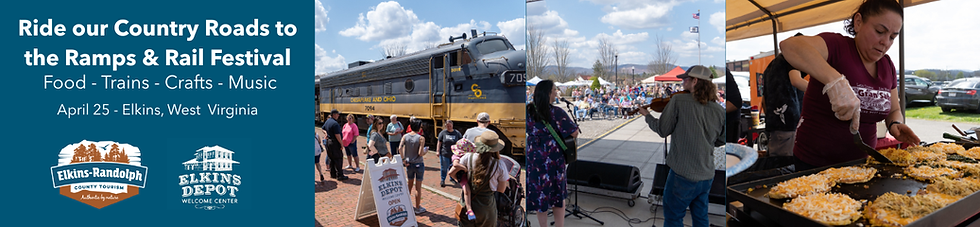
The 16th Annual Ramps and Rail Festival pulls into town April 25, 2026, at the Elkins Depot Welcome Center in West Virginia, and if you’ve never experienced the unapologetic glory of this wild Appalachian onion, this is your sign.
From 10 a.m. to 4 p.m., downtown Elkins will basically smell like heaven with a hint of garlic. The festival, which keeps getting bigger every year, is expanding for the second year beyond Town Square and onto Railroad Avenue and Third Street — aka more room for more food, more crafts and more reasons to stay all day.
Ramp lovers and first-timers alike can dive fork-first into a lineup that’s anything but basic. Think ramp burgers. Ramp hot dogs. Dumplings. Egg rolls. And about 50 food and craft booths serving up Appalachian creativity in every form. It’s giving small-town charm meets foodie fest.
Live music and entertainment will roll from 11 a.m. to 3:30 p.m. (lineup to be announced), setting the soundtrack for your spring reset. Announcements and introductions kick off at 10 a.m., and the day wraps at 4 p.m. with the presentation of award plaques — yes, you can vote for your favorite vendors, so choose wisely.
And because this is Ramps and Rail, the Durbin & Greenbrier Valley Railroad will offer train rides at 11 a.m. and 1 p.m. for anyone ready to romanticize their life a little. It’s one of the first chances of the year to hop aboard, so if a scenic spring ride through the mountains sounds like your vibe, plan ahead and check mountainrailwv.com for tickets.
The festival is more than a food event. It’s a full-on Appalachian culinary experience celebrating a wild edible that locals wait all year to harvest. Ramps — for the uninitiated — are a seasonal delicacy with a bold flavor and an even bolder fan base. Around here, they’re basically royalty.
For vendors looking to join the party, applications will be available in February. You can request one by emailing elkinsdepotmanager@gmail.com or calling 304-635-7803. Be sure to specify whether you’re applying as a food or craft vendor. Spots are first-come, first-served once payment is received. And organizers stress: Don’t fall for spam. Only trust communications from the Elkins Depot Welcome Center or Elkins-Randolph County Tourism pages.
So, whether you’re here for the ramps, the rails or just the vibes, April 25 is your chance to celebrate spring the Appalachian way — loud, flavorful and just a little bit funky.

“I stepped out of my dome and the sky just… went on forever,” Carter said. “I felt like I was on another planet, and Zion was just waiting a few miles away.” He spent the day hiking Angels Landing, scrambling through slot canyons, and then returned to his transparent dome to watch the stars reflect off the desert sand.
The outpost, with its quirky mix of cave-inspired villas, geodesic Zen Domes, and sand-cruisers for desert exploration, allowed Carter to blend comfort with adventure. Fire pits and communal spaces made it easy to swap trail stories with fellow travelers, while the remote location offered the quiet and focus he craved after months of city life.
By the third day, Carter says he was hooked. “I came for a basecamp, but I left with a full desert immersion — Zion, the stars, the sand, the freedom. I don’t think I’ve ever felt more alive.”
OutpostX isn’t just a stopover. For adventurers like Carter, it’s a gateway to the wild, rugged beauty of Utah, where every sunrise and canyon corner tells a story waiting to be explored.

Yellowstone National Park isn’t just a pretty place to hike—it’s one of the most active, unpredictable, and low-key chaotic landscapes in the country. Beneath the scenic overlooks and wooden boardwalks, the park is constantly moving, steaming, erupting, and evolving. If it feels alive, that’s because it kind of is.
Yellowstone sits on top of a massive volcanic system, which sounds dramatic (and it is), but mostly shows itself through geysers, hot springs, and steam vents scattered across the park. Old Faithful still does its thing on schedule, drawing crowds like a natural headline event, while nearby geysers randomly pop off just to keep things interesting. Then there’s Grand Prismatic Spring—blazing with unreal color bands that look filtered but aren’t. The heat-loving bacteria around it literally paint the landscape, turning science into art.
Above ground, Yellowstone runs on wildlife energy. This is one of the few places in the Lower 48 where animals still move like they’ve got full control. Bison roam wherever they want, often stopping traffic without apology. Wolves prowl the Lamar Valley, reshaping the ecosystem just by existing. Elk, bears, coyotes, and moose all play a role in a daily cycle that’s been happening long before humans showed up with cameras and trail maps. Watching it unfold feels less like sightseeing and more like tuning into a live nature feed.
Water also does a lot of heavy lifting here. Yellowstone Falls crashes through the Grand Canyon of the Yellowstone with a force that hits before the sound does.
The canyon walls glow yellow, orange, and red, especially in the golden hours, proving the park’s name wasn’t random. Rivers cut through valleys, lakes stretch toward the horizon, and thermal runoff turns streams into swirling shades of blue and green.
And then there’s the hiking—boardwalks and backcountry alike. You can stroll past bubbling mud pots and hissing steam vents in sneakers, or disappear onto miles of trail where cell service drops and your only notifications are birds and wind. Every turn feels like a different park: alpine forests, open meadows, rocky cliffs, wide-open skies. It’s a choose-your-own-adventure, just with more bison.
What really makes Yellowstone hit different, though, are the quiet moments in between the chaos. Steam rising at sunrise. A sudden wildlife sighting that stops everyone in their tracks. The realization that the ground beneath you is warm, moving, and shaping itself in real time. Yellowstone isn’t frozen in history—it’s constantly becoming something new.
So what’s really going on inside Yellowstone National Park? A lot. It’s wild, it’s active, and it refuses to be predictable. And that’s exactly why it still pulls people in—generation after generation—looking for something real, untamed, and way bigger than a screen.
MORE
ADVENTURE
MORE
READS
Coolest Outdoor Spots for a Spring Reset
What You Should Know Before Hitting These Towns
Four Paws, Backpacking in New Mexico
GEAR
Travel.
Tested Outside. Trusted Everywhere.
From rugged mountain towns to quiet backcountry escapes, our travel stories spotlight outdoor destinations that invite you to slow down, explore deeper, and reconnect with the outdoors.
Newest gear must-haves for 2026
3 min read
Travel
Is Flagstaff the Coolest "Mountain" Town in Arizona?

%20(1).png)


_tif.png)


.jpg)


.png)


_JPG.jpg)