Three Years of Solo Travel, Backpacking
Updated: Jul 21
From first-time backpacker to global adventurer, Aleks found confidence, resilience and clarity one trail at a time.
BY Kay Esposito, Feb. 7, 2026
SOLO HIKING

For many travelers, long term exploration begins with a single decisive break from routine. For Aleks, that moment arrived shortly after finishing his studies. The original plan had been to move to Australia and pursue a surf-oriented lifestyle, but a lack of money forced him into full time work instead. During that first year of employment, he used short holidays to backpack through Thailand and later Mexico.
Thailand, in particular, sparked a lasting shift. Exposure to new ecosystems and the basic structure of backpacking gave him a sense of possibility that did not fade when he went home. The desire to travel intensified until, in January 2022, he decided that the year ahead needed to be different. By June, he left.
Aleks had grown up imagining nature in fairly narrow terms. Extended travel challenged those assumptions. He encountered jungles, mountain systems, and hydrological features that he had only seen in photographs. Encounters with these landscapes reshaped his priorities and motivated him to document what he saw. Photography became an essential part of that shift. His camera gave him a tool for observing terrain, light, and weather in a more technical and disciplined way. Over time, it also became a primary connection point to the community that follows his work.
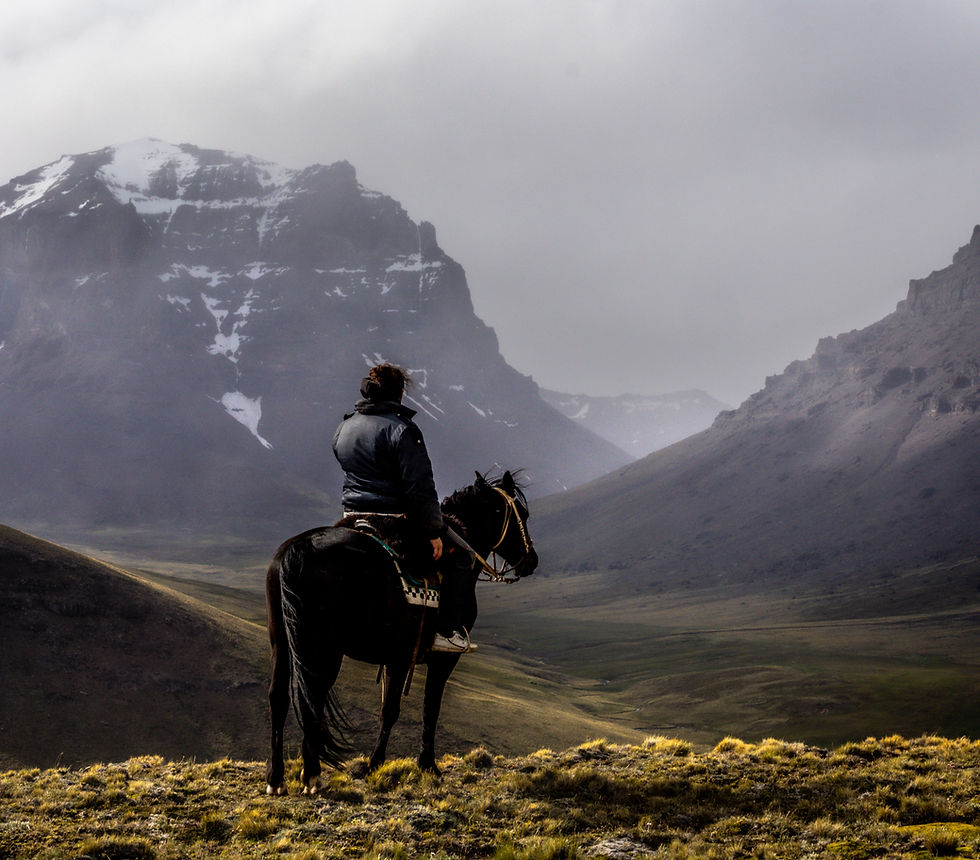
The personal evolution that occurred during this period did not begin with confidence. Early in his travels he avoided solitude, choosing instead to stay close to people he did not fully connect with. That pattern introduced fatigue and distraction.
"I spent time with people I didn’t fully match with, just because I was afraid of loneliness. I learned pretty quickly that this was a mistake. Being alone is peaceful," he said.
Gradually he discovered that time spent alone in natural settings allowed for more clarity and less emotional strain. He did not feel that he became a different person. Instead, he recognized that immersion in new landscapes made him more aware of who he already was.
At first, I tried to avoid being alone
A single trip illustrates the arc of this transformation. During an unplanned trekking effort in Nepal he completed the Everest Base Camp route along with an additional ascent to Gokyo Ri. The decision to add the Gokyo section was made after a brief look at a map in Kathmandu. There had been no formal preparation and no prior trekking experience.
The expedition lasted 18 days and included low budget gear, rented items of uncertain quality, and full pack carrying at altitude. Environmental exposure, cold stress, and persistent elevation gains created continuous physiological demands.
“Everything was low budget. Carrying our own backpacks, renting cheap gear, no guide, negotiating everything ourselves. The cold, the altitude, and the duration made it incredibly challenging, especially as a first hike.”
Despite those challenges he learned to trust his own judgment and physical response patterns. Altitude provided immediate feedback. The combination of optimism, bodily awareness, and basic risk assessment allowed him to move through uncertainty without losing focus.
For me, it’s always a mix of optimism and intuition
"I don’t only listen to my gut. I listen closely to my body, especially at high altitude, where it gives immediate feedback. I trust my body completely.”
Risk management remains a central part of how Aleks travels. He pairs intuition with practical safety systems. This includes route planning, situational awareness in urban and rural areas, and careful evaluation of environmental hazards. His approach emphasizes the prevention of avoidable risk. He considers safety a precondition for freedom and sees basic decision making as the foundation of long-term travel.

His gear selection has become more disciplined with experience. One item that demonstrated its utility repeatedly was a dry bag. During high rainfall events, waterfall approaches, and river crossings, it protected essential equipment.
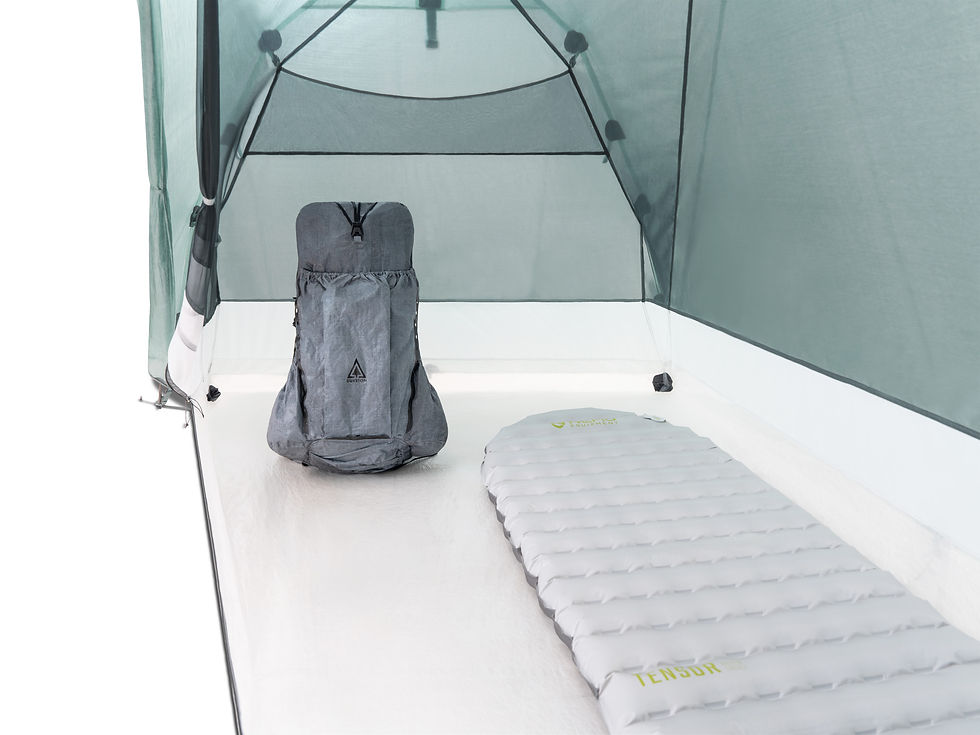
Aleks organizes his pack around clear priorities, with photography equipment and drone gear considered non-negotiable even when they add weight. Clothing is minimal and practical, relying on washing rather than carrying excess. He chooses shelter based on privacy and low visibility, while sleep and food systems are designed to meet basic needs efficiently rather than providing extra comfort or complexity.
“My dry bag definitely earned my trust," Aleks said. "During waterfall hikes, heavy rain, and river crossings, it kept my most valuable items safe. Especially when crossing rivers, it proved its value over and over again.”
Physical conditioning supports his travel style. Aleks has always been active, but extended time outdoors refined his understanding of his own endurance. He rarely trains specifically for trips. Instead, he maintains general fitness through consistent movement. He has learned that his enthusiasm for long days can sometimes lead to overexertion, and he considers this an ongoing point of self-regulation.
Extended time outside has also changed how he relates to fear. After years of consistent exposure to difficult environments, he experiences less fear in general. Discomfort has become familiar rather than destabilizing.

Emotional regulation during long periods of isolation relies on communication when necessary. If travel challenges escalate, he contacts trusted friends to maintain grounding. These connections are a vital lifeline; sharing thoughts and experiences with them helps him process well-being through connection. The presence of these friends provides reassurance and a sense of continuity that anchors him through uncertainty.
Don’t go outside to escape your life. Go outside to understand yourself better
"You don’t need to change who you are. You’ll mostly become more of yourself. Let go of the expectation that it has to be extreme or life-changing every day. Be ready to spend time alone, listen to yourself, and realize that peace doesn’t come from places. It comes from being okay with who you are.”
Looking back on his three-year progression, Aleks encourages others to approach the outdoors as a place for honest self-observation rather than escape. He emphasizes that transformation does not need to be dramatic or continuous. Instead, it develops through repeated exposure, solitude, and the ability to listen to internal signals without distraction.
If the landscapes he has spent the most time in could speak, he believes they would define him as an explorer. To him, the defining physical sensation of the past three years is freedom, shaped not by distance traveled but by the capacity to move through environments with awareness, restraint, and curiosity.
You are invited to follow Aleks’ journey on Instagram: @Aleksxrx


.png)