What Are You Missing by Sticking to the Popular Trails?
We found out what the popular trails can’t give you — space, silence and a story worth getting a little lost for.

There’s a moment, somewhere between losing cell service and gaining perspective, when you realize you’ve officially left your normal life behind. For me, that moment hit just outside the tiny mountain town of South Fork, Colorado — population barely over 500 — where the road bends along the Rio Grande and the air suddenly feels… quieter. South Fork, Colorado isn’t trying to be trendy. It doesn’t care about your aesthetic. And that’s exactly why it works.
I was there on assignment for UNPLUG, chasing a weekend reset and a trail that locals kept hyping up like a hidden gem: the Weminuche-area access routes near the Rio Grande National Forest. No overproduced signage. No crowds with matching hiking fits. Just miles of trail threading through some of the most untouched wilderness in southern Colorado. One of the main jumping-off points is Thirty Mile Campground, tucked northwest of Creede, where the road quite literally narrows into commitment.
From there, trails like Weminuche Trail and Grizzly Creek Trail pull you straight into the backcountry, no warm-up required. The drive in runs along Forest Road 520 — the primary route — while other rugged roads in the region branch off toward more remote trailheads deeper in the wilderness, connecting to routes like Ute Creek, Beartown, and Hope Creek. It’s the kind of place where getting there is part of the story, and once you arrive, the map starts to matter a whole lot less.

South Fork sits at more than 8,200 feet in elevation, right where the South Fork of the Rio Grande meets the main river, and it’s basically a gateway into a sprawling network of public lands — including the massive Rio Grande National Forest and nearby wilderness areas. That means one thing: options. Like, hundreds of trails ranging from chill meadow strolls to full-on lung-busting alpine climbs.

But I wasn’t here for “hundreds.” I wanted one solid, memorable hike. Something that felt like a story.
So early Saturday morning, fueled by gas station coffee and questionable road trip snacks, I headed toward a trail system- forested, quiet, and just wild enough to remind you you’re not in control out here.
The trail started the way all good Colorado hikes do — deceptively easy. A soft dirt path winding through dense stands of pine and aspen, the kind that filter sunlight into that cinematic golden glow. Within minutes, the sounds of the road were gone, replaced by wind in the trees and the occasional rush of water nearby. Streams and creeks are everywhere in this region, fed by mountain snowmelt, and many trails cross them multiple times.
And yeah — I definitely underestimated how grounding that sound would be.
There’s something about hiking along water that slows your brain down. Maybe it’s the rhythm. Maybe it’s the altitude forcing you to breathe deeper. Either way, I stopped checking my phone (not that I had service anyway) and started noticing things I usually ignore — like the way the trail curves naturally around tree roots, or how the temperature drops instantly when you step into shade.
About a mile in, the trail began to climb. Not aggressively, but enough to remind you that you’re in the San Juan Mountains, where “moderate” is still very much a workout. The terrain here varies a lot — from gentle forest paths to steep alpine routes that can stretch for miles and gain serious elevation. I passed exactly three people the entire day. That’s not an exaggeration.

In a time where even “hidden” spots are usually flooded with Instagram hikers and drone footage, South Fork still feels offline in the best way. It’s the kind of place where solitude isn’t rare — it’s expected.
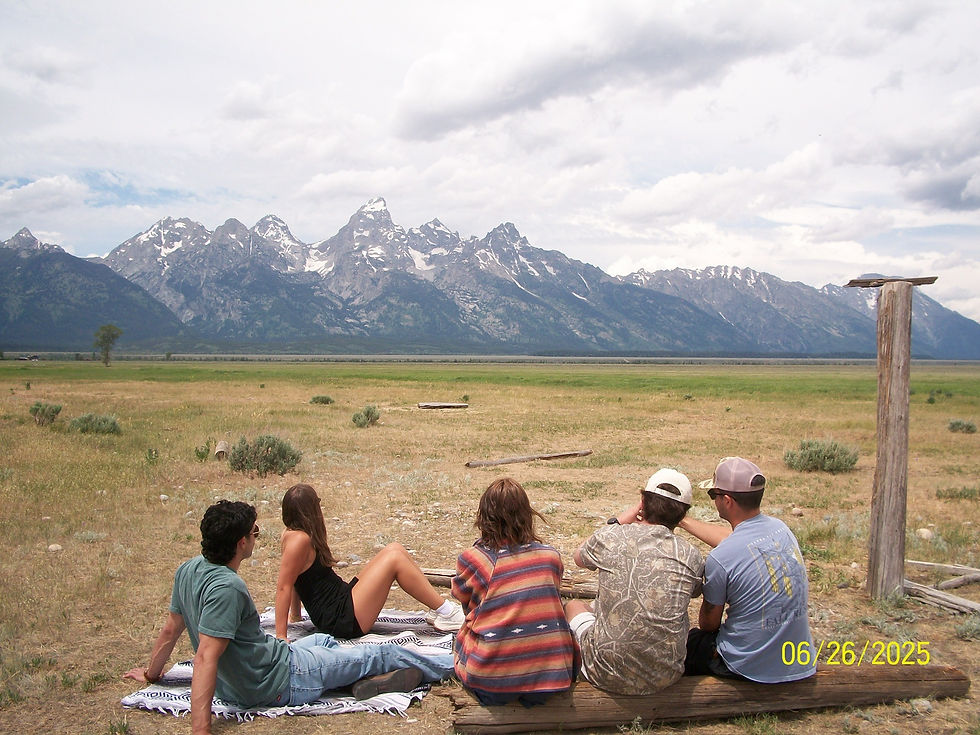
By midday, I reached a clearing that honestly didn’t feel real. A wide-open alpine meadow, framed by mountains in the distance, with wildflowers just starting to show color. No fences. No crowds. Just space.
I dropped my pack and stayed there way longer than planned.
And that’s kind of the thing about hiking here — you stop caring about the destination. The trails around South Fork aren’t just routes to a viewpoint; they’re the experience itself. Whether you’re tackling something intense like Handies Peak nearby or sticking to shorter forest loops, the variety is unreal.
On the way back, the light shifted. Late afternoon in the mountains hits differently — softer, cooler, almost cinematic again. The same trail I’d hiked that morning felt completely new, like I was walking through a different place.
By the time I got back to town, tired and a little sunburned, South Fork was doing what it does best: absolutely nothing. A couple of cars, a few small lodges, and the river moving steadily through it all.

No nightlife. No lines. No pressure to do anything except exist. And honestly? That might be the coolest part.
Because in a world that’s constantly plugged in, optimized, and curated, places like South Fork remind you that not everything needs to be shared to be meaningful. Some weekends are better left undocumented — or at least, felt more than posted.
So if you’re looking for a hike that’s less about conquering and more about disconnecting, this is your sign. Go where the map gets a little vague. Follow the trail a little longer than planned.
South Fork will be there. Quiet as ever.
Plan your weekend in South Fork. Click below for more information. Highly reccomend!


.png)