What Experienced Backpackers Carry That Beginners Usually Don’t
Updated: Aug 13
Seasoned hikers cut weight and boost reliability by focusing on repair skills, smart redundancy and field-tested essentials instead of overpacking.
BY KAY ESPOSITO, MAY 14, 2026
GEAR TIPS

Backpacking looks simple until you’re a few miles in: everything on your back starts to matter, and anything unnecessary feels like a mistake. That’s usually where the gap shows up between beginners and experienced hikers, not in fitness, but in what’s inside the pack. Ask anyone who has spent enough nights outside, and the pattern is pretty consistent.
Beginners tend to pack for what they think might go wrong. Experienced backpackers pack for what actually does. That difference shows up fast once the trail gets long, steep or wet.
Less “just in case,” more fixing things on the fly
New hikers often carry backups for their backups. Extra socks, extra layers, extra gadgets. Seasoned backpackers go the other direction. Instead of carrying duplicates, they carry ways to fix what breaks.
Gear tape, a small repair kit, a bit of cordage and a needle and thread are standard. A lot of hikers also wrap duct tape around trekking poles or water bottles so it’s always there when something rips mid-trip. The mindset is simple: if it breaks, you deal with it. You don’t carry a second one.
Water isn’t carried — it’s managed
Beginners often load up on water and suffer for it on climbs. Experienced hikers rarely do that.
Instead, they carry a filter or purification system and treat water on the go. Streams, springs and lakes become refill points instead of something to avoid. It’s a shift in trust: you don’t carry everything you need for the next 10 miles — you know how to make what’s available safe.
Navigation doesn’t live in one place
Phones are great until they aren’t. Batteries die. Screens crack. Signal disappears fast once you’re off the ridge. That’s why experienced backpackers almost always carry a paper map and compass, even if they also use GPS apps. Offline maps are standard, not backup. It’s not about paranoia. It’s about not betting your entire route on one device.
Sleep systems built for real nights, not perfect forecasts
One of the fastest ways to learn on trail is a cold night. Beginners often underestimate how cold it gets after sunset, especially in the mountains. Experienced hikers don’t.
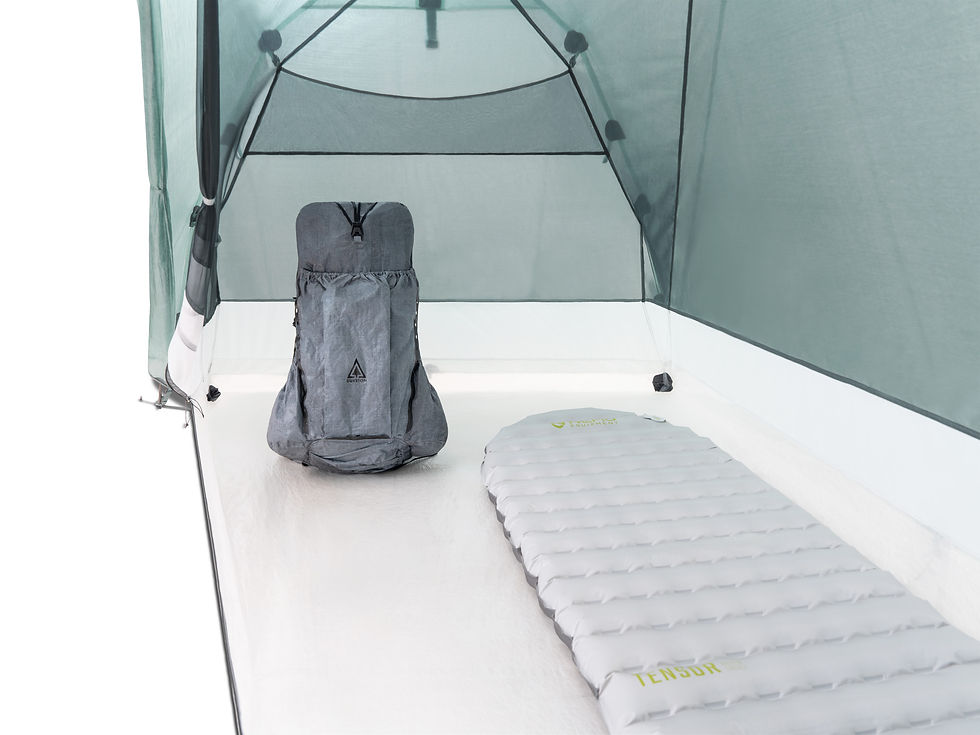
They build sleep systems around worst-case conditions, not best-case forecasts, a properly rated bag or quilt, plus an insulated pad that actually protects you from the ground. Even in summer, extra insulation is standard in higher elevations.

One solid emergency layer, not a full wardrobe
Instead of extra outfits, experienced hikers rely on layers that actually work together: base, insulation and shell. But the key piece is the emergency layer — a jacket or rain shell that doesn’t get used casually. It stays dry in the pack, ready for weather that turns fast. Beginners rotate through clothing too much. Experienced hikers keep one system and stick to it.
Headlamps over everything else
You almost never see experienced hikers relying on handheld flashlights. Headlamps are standard because hands-free light matters the second you’re cooking, filtering water or setting up camp in the dark. Most hikers carry backup batteries or a second light if they’re going deep.
Comfort is not the enemy
There’s a misconception that experienced backpackers suffer more. They don’t — they just choose carefully. A small sit pad, a better snack than standard trail food, or something to read at night can make a big difference over multiple days. These aren’t luxuries. They’re what keep morale from dropping when miles start stacking up. Long trips aren’t just physical. They’re mental.
Simple gear, fewer moving parts
Cooking setups are another place where experience shows. Beginners often bring too much: big stoves, full cookware kits, extra fuel. Experienced hikers strip it down. A small stove, one pot, one utensil. Sometimes no cooking at all on short trips. Less gear means less to break, clean or carry.

The real shift: judgment replaces gear
After a while, experienced hikers stop trying to prepare for every possible scenario.
They start focusing on the ones that actually happen: rain that shows up early, feet that start hurting on day two, gear that fails when you least want it to. That’s the real difference. Not lighter packs for the sake of it, but smarter ones built from experience.
At some point, backpacking stops being about what you can bring and starts being about what you can confidently leave behind.
UNPLUG Magazine


.png)