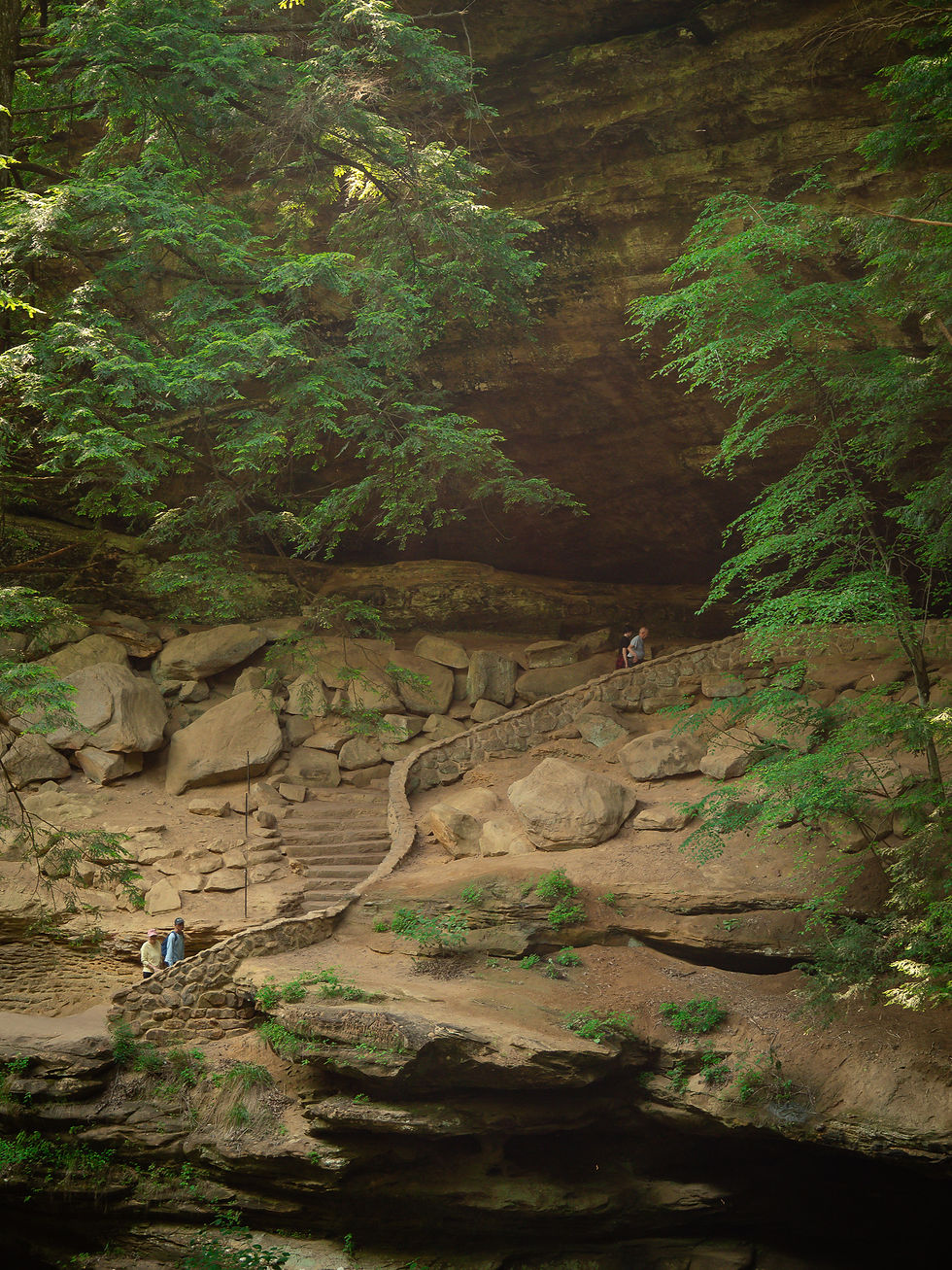
You Won’t Find This Place on Purpose (And That’s the Point)
- UNPLUG. Magazine

- Apr 10
- 3 min read
Updated: May 17
BY UNPLUG STAFF, MAY 15, 2026
WATER ADVENTURES

There’s a kind of silence in the South that doesn’t feel empty. It feels intentional. Not the postcard version of the region, not the crowded overlooks or the heavily tagged waterfalls, but the in-between spaces. The places you only find if someone tells you, or if you miss your turn and decide not to turn back.
This story started like that.
We were headed somewhere else entirely when the road narrowed, the signal dropped, and the landscape started doing that quiet Southern thing where it stops trying to impress you and just becomes itself. That’s how we found Little River Canyon National Preserve, a place that somehow still feels like a secret, even though it absolutely shouldn’t be.
The canyon you don't expect
Little River Canyon sits on top of Lookout Mountain in northeast Alabama, but it doesn’t feel like “top of anything.” It feels carved, not elevated. The river runs along the canyon floor instead of through it, which is the first clue that this place doesn’t follow the usual rules.
The water moves fast in some sections, then disappears into still pools that reflect the rock walls like glass. You can hear everything here, wind, water, the occasional distant call of someone who’s definitely not in a hurry. Most people pass through on their way somewhere else. That’s what makes it work.There are overlooks along the rim, but the better experience is below. Down where the road noise doesn’t make it. Down where the air feels cooler than it should for Alabama.

How to actually experience it
Start early. Not because it’s crowded, it usually isn’t, but because mornings here feel like the canyon is still loading. The main access point drops you close enough to the water that you can hear it before you see it. If you’re paddling, certain sections offer short, seasonal runs after rain. If you’re hiking, the trails follow the edge in and out of forest and rock formations that feel half finished, like the earth paused mid-construction.
Bring less than you think you need. The canyon does not reward overpacking. It doesn’t really reward planning either. What it does reward is attention.
Rhythm of the place
After a while, you stop trying to “do” the canyon and just move with it. That’s when it starts to show its actual personality, not dramatic, not curated, just steady. Fish breaking the surface. Leaves spinning in slow circles near eddies. Rock that looks like it’s been waiting a very long time for someone to notice it.There’s a section where the canyon opens slightly and the river bends hard left, disappearing behind a wall of trees. Most people don’t follow it far. There’s no sign telling you to continue. That’s usually where places like this lose people.
We followed it anyway. It got quieter.

Why it still feels unknown
The truth is, this isn’t undiscovered. It’s just underused. The South is full of places like this, not hidden, just overlooked. They don’t need hype because they’ve never depended on attention to stay interesting. And that might be the real reason places like Little River Canyon still matter. They don’t ask to be part of your itinerary. They don’t care if you post them. They just exist, doing what they’ve always done.
If you go
Go without an agenda. Go without trying to “cover it.” The canyon doesn’t work like content. It works like weather, you experience it, not capture it. And if you find yourself standing at the edge thinking it feels quieter than expected that’s not the canyon being empty. That’s you finally hearing it.