The Trekking Pole Question: Essential Tool or Overhyped Extra?
Updated: May 14
From ultralight carbon fiber models to no-pole purists, hikers debate whether trekking poles improve efficiency and stability or just add unnecessary weight and complication on the trail.
BY UNPLUG MAGAZINE STAFF, MAY 11, 2026
TREKKING

Spend enough time on trail and you’ll notice a quiet divide: hikers who plant trekking poles into every step, and hikers who don’t carry them at all. In between are those who strap them to their packs for most of the day and only pull them out on climbs or descents.
Trekking poles have become one of the most common pieces of modern backpacking gear, showing up everywhere from the Appalachian Trail to weekend state park loops. But despite their popularity, they remain one of the most debated tools in outdoor travel. Some hikers call them essential. Others call them unnecessary. Most fall somewhere in the middle, adjusting use based on terrain, fatigue and personal preference.
If there is one place trekking poles consistently earn their keep, it’s downhill. Experienced hikers often point to long descents as where fatigue builds fastest. Poles help distribute load away from knees and hips and provide additional points of contact with the ground. On uneven or loose terrain, that extra stability can make a noticeable difference.
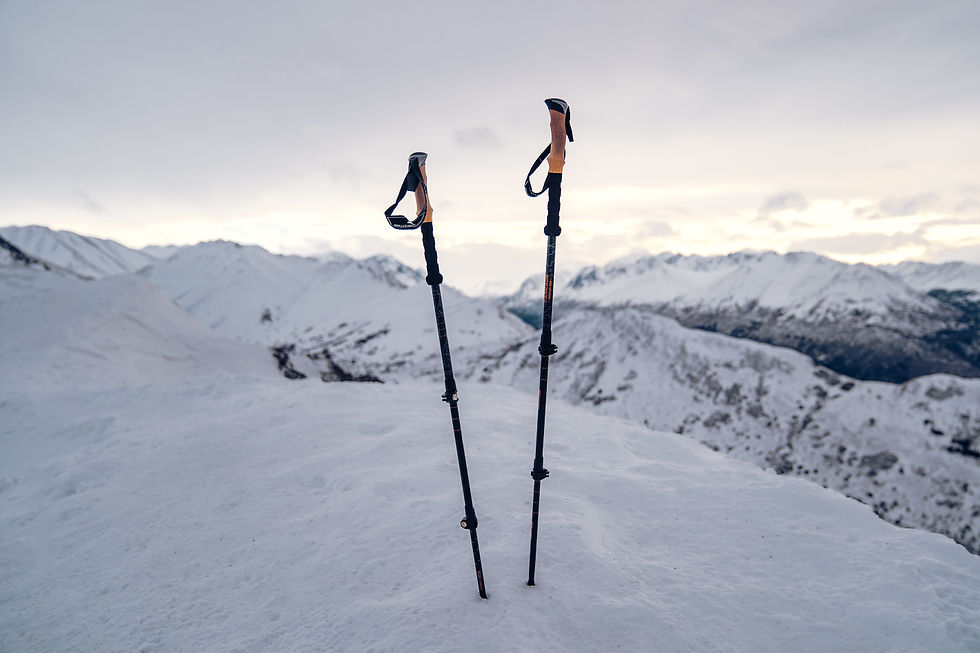
That is one reason they are widely used on long-distance trails, where elevation gain and loss accumulate over days, not hours. But even hikers who rely on poles don’t always use them consistently. Many adjust based on slope, pack weight and how their body feels after miles of movement.
On steep ascents, trekking poles become more divisive. Some hikers use them to engage upper body strength and reduce leg fatigue. Others find them awkward on steep or technical climbs, where hand placement, scrambling or balance adjustments require free movement.
Trail runners, in particular, often avoid poles altogether, favoring arm swing and unencumbered movement. For them, speed and rhythm matter more than added support.
The result is a split in approach that often reflects hiking style more than terrain alone.
Like most gear decisions, trekking poles eventually come back to weight. Modern poles range from lightweight carbon fiber models to heavier aluminum versions built for durability. Brands like Black Diamond Equipment, LEKI and REI Co-op dominate the category, offering options for everything from ultralight fastpacking to rugged multi-day treks.
Carbon fiber poles appeal to ultralight hikers looking to shave ounces. Aluminum poles tend to be favored in rougher terrain where durability matters more than minimal weight savings. Still, even the lightest poles add something to carry and manage, especially when not in use. That tradeoff is where the debate often starts.

For hikers who rely on them regularly, trekking poles stop being accessories and become part of how they move. They can help establish rhythm on long flats, provide balance during river crossings and support tents or tarp shelters that use trekking poles as structural elements. In ultralight setups, poles are not just tools for hiking, they are part of the shelter system itself.
That dual purpose has helped cement their place in modern backpacking gear lists, even among hikers who might not use them every mile.
Not everyone adapts to poles easily. Some hikers report that poles interfere with natural arm movement or become a hassle in dense forest sections, where constant adjustment is required. Others find them unnecessary on well-maintained trails where footing is predictable.
There is also a learning curve. Improper use can lead to awkward posture, wrist strain or overreliance that doesn’t translate well to technical terrain. Because of that, some hikers try them once and never use them again. Others start without them and eventually add them after longer trips.
Ask enough experienced hikers and a pattern emerges: there is no universal rule for trekking poles.
Instead, usage tends to evolve. Early trips often involve experimentation. Later trips become more intentional. Some hikers refine when and where they use poles. Others abandon them entirely. Terrain, pack weight, injury history and hiking speed all play a role. So does personal preference, something no gear spec sheet can fully predict.

Trekking poles are less about necessity and more about style of movement. For some hikers, they are a constant point of contact with the trail. For others, they are an occasional tool pulled out when conditions demand it. And for a smaller group, they are simply not part of the system at all.
What makes the debate interesting is not that one side is right, but that both approaches work.
In the end, the trail doesn’t care whether hikers carry poles. It only responds to how they move through it, one step, or two poles, at a time.


.png)