Interrupted, not defeated: A return to the Colorado Trail
Updated: Aug 14
After leaving the Colorado Trail unfinished, Robert J. Hill returned one year later to complete the miles that never stopped calling.
BY Ara G., June 16, 2026
BACKPACKING

By the time Robert J. Hill stepped back onto the Colorado Trail at Monarch Mountain, exactly one year after leaving it, the place was familiar and completely changed. The ridge lines were the same. The exposure was the same. The thin air was not forgiving. Hill first walked away from the Colorado Trail in 2024 with unfinished business.
He and his wife had set out to hike the trail together, adjusting expectations when time allowed them only the first half. While his decision to stop at Monarch Mountain made sense then, it did not last. Hill is no stranger to long-distance hiking.
In 2022, he completed the Pacific Crest Trail, an experience that reshaped how he thought about endurance, identity, and community. That 2,650-mile journey recalibrated his sense of what mattered and confirmed his attraction to dramatic terrain, unpredictable weather, and the kind of effort that strips life down to essentials.
“I knew I wanted another hike, something that would bring me back to that version of myself I discovered on the PCT, but without stepping away from my life for six months. The Colorado Trail felt like the obvious choice.”

The Colorado Trail, at just under 500 miles, offered a different scale but no shortage of intensity. Much of the trail runs above 10,000 feet. Even modest mileage days carry weight at altitude, where the air is thin and recovery comes slowly.
Hill describes nights were climbing 3,000 to 4,000 feet felt like far more by the time he reached camp. That contrast between beauty and hardship defines much of the Colorado Trail experience. The effort required to move through the state on foot exposes hikers to extremes that do not register from a highway pullout or a short-day hike. Hill found that walking through Colorado revealed transitions that felt both subtle and profound.
The PCT showed me how pushing myself physically opens up a deep well of emotion, and the Colorado Trail reaffirmed that. You experience the full range of human emotions on long trails because it is indescribably hard at times.
Hill began his southbound return alone. Friends who had planned to join him didn’t, leaving Hill to settle into the first day's solo. With nearly 4,000 trail miles behind him, solitude was not unfamiliar. Still, the prospective journey alone carried an emotional charge.
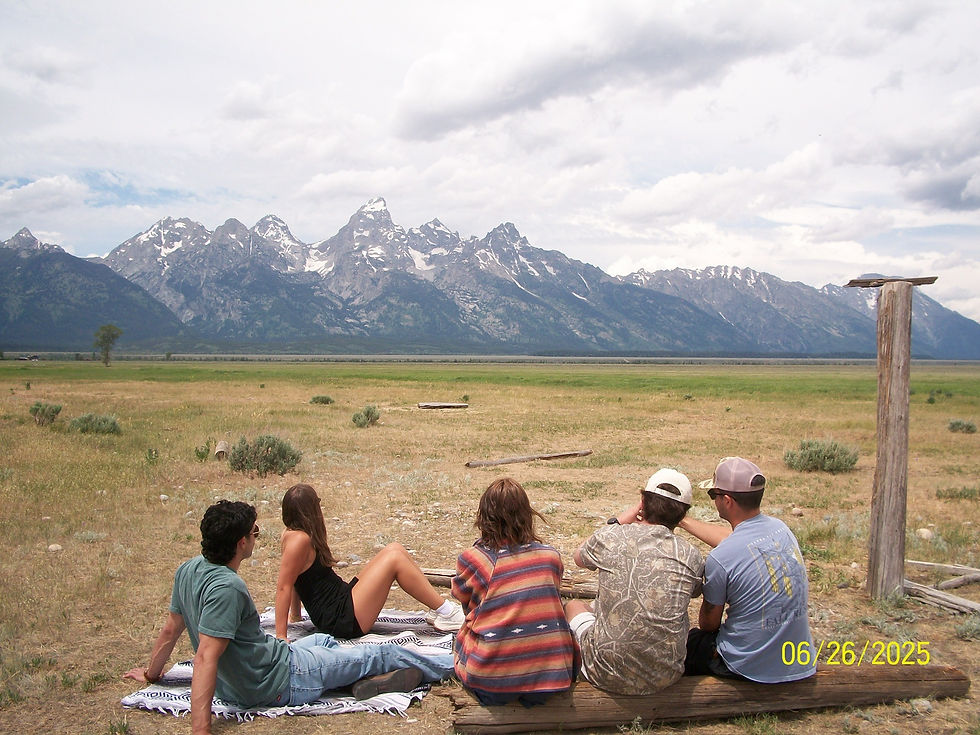
He had learned how valuable, shared experience could be, especially after hiking part of the trail with his wife the year before. Thankfully, about 100 miles in, Hill met and connected with a group of people who went on to be his trail family for the rest of the hike.

The start of the second half of the CT brought some unexpected challenges. I knew there were incredibly epic landscapes ahead of me, but there were also a lot of big unknowns.”
At the same time, Hill noticed how differently his body responded. Living at sea level in Portland, Oregon, he expected the elevation to hit hard. Instead, consistent off-trail training paid off. Within days, he was logging consecutive 26- to 29-mile days.
Weather quickly reasserted itself as the dominant variable. Hill hiked the Colorado Trail during the shoulder season, when summer gives way to fall and conditions can shift without warning.
"Thunderstorms are simply part of daily life there… I was wicked surprised by how fast Colorado storms move and tend to exist in pockets rather than as large widespread systems.”
Thunderstorms were not confined to afternoons. Lightning, sleet, hail, and sudden temperature drops arrived at all hours, often at elevation. He emphasized that cold temperatures were a critical factor in navigating progression along the trail.
Over time, Hill learned to read the sky and wind more closely, adjusting plans on the fly. Though, rather than fighting the volatility, he worked with it. That approach shaped the rhythm of his second half, which included multi-day breaks to wait out storms before heading back into the high country. On the Colorado Trail, it showed up in widespread beetle kill, prompting questions about land management and the absence of natural fire cycles.

“Thru hiking has shown me that having a meaningful perspective on environmental change without spending time immersed in nature feels out of integrity,” he says, “These long treks have made me believe even more strongly that deeper connection to the land is part of the solution and that requires immersing in it.”
Hill is careful not to position himself as an expert on climate or land management. Still, crossing six wilderness areas and drinking from five major waterways along the CT sharpened his sense of responsibility as a trail user. Gear choices reflected that focus on intention. Hill carries a streamlined kit, refined over thousands of miles. One item stands apart: his camera.
A photographer for over two decades, Hill left his camera behind on the PCT, a decision he later reconsidered. On the Colorado Trail, he carried it the entire way. The images he values most are not of ridgelines or passes but of the people he met, and the relationships formed mile by mile.
When Hill returned home, the adjustment followed a familiar pattern. Long trails slow his internal pace, creating clarity that contrasts sharply with modern life. Coming back often triggers a period of reflection, not depression, but integration.

The trail strips things down. Coming home is about figuring out how to live that truth in the world you left behind.
For those considering a longer journey, Hill sees the trail as both introduction and invitation. Walk far enough, pay attention, and the landscape begins to give something back. Not answers, exactly, but a clearer sense of how far the body can go and how much the mind has underestimated it all along.
| Follow Robert’s work on Instagram: @robertjhill
UNPLUG MAGAZINE


.png)