Macomb, Illinois: Where Monopoly Began and History Lives on
In western Illinois, Macomb turns a surprising piece of American history into an experience visitors can walk, play and explore.
BY Kay Esposito
HISTORY & CULTURE


For a town surrounded by the rolling farmland of western Illinois, Macomb has an unusually large place in American history.
It is the birthplace of Elizabeth “Lizzie” Magie, the inventor whose ideas ultimately helped shape one of the most recognizable board games in the world. But Macomb’s history extends well beyond Monopoly.
The city has connections to Abraham Lincoln, the abolitionist movement, higher education, historic railroads and the distinctive regional identity known as Forgottonia.
Today, visitors can experience much of that history on foot, particularly around the city’s historic Courthouse Square.
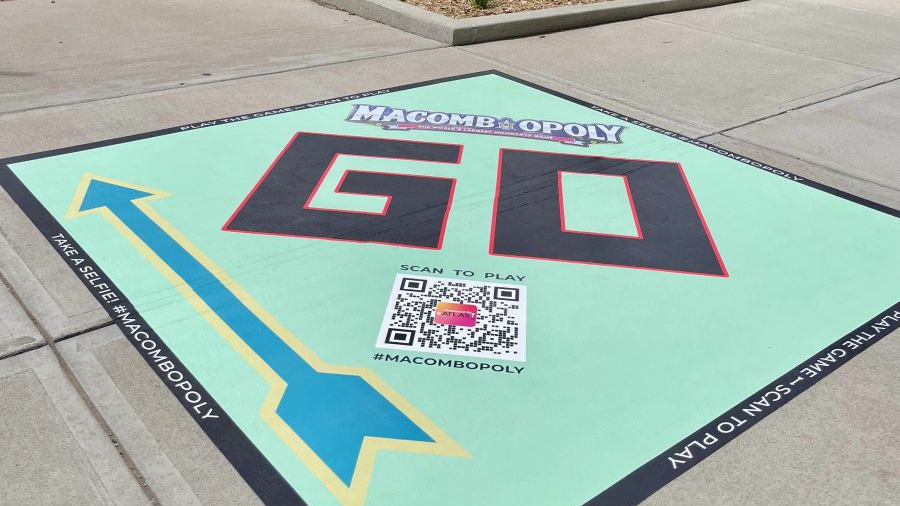
At the center is Macombopoly, a larger-than-life interpretation of Monopoly that turns the downtown square into an interactive game board. Unveiled in 2024, the attraction uses the streets and sidewalks surrounding the courthouse as its playing surface, with sculptures, historic information, trivia and an app-guided experience that encourages visitors to explore downtown.
Macombopoly is more than a giant board game. It is a walking tour built around the story of the woman whose invention came first.
The Woman Behind the Game
Lizzie Magie was born in Macomb on May 9, 1866, the daughter of James K. Magie, a newspaper publisher and abolitionist. Her father was also connected to Abraham Lincoln and accompanied Lincoln during his travels through Illinois during the famous Lincoln-Douglas debates.
Magie grew up in an era when women had few opportunities to become inventors, business leaders or public intellectuals. Yet she pursued all three.
She was a writer, actress, inventor and advocate for women's rights. In the early 1900s, she developed The Landlord’s Game, a board game designed to demonstrate the economic consequences of land monopolies.
Magie was influenced by economist and social reformer Henry George, who argued that land ownership and taxation played a major role in economic inequality. Her game was intended as a teaching tool. The irony of its history is remarkable.
Magie's game was patented in 1904, but decades later, the world would come to know a modified version as Monopoly. Charles Darrow received widespread credit for the game before Magie's role in its development became more widely recognized.
Macomb has embraced that overlooked history. The downtown square now features a life-size statue of Magie, giving visitors a chance to stand alongside the woman whose idea helped inspire a game played around the world.
Macombopoly was unveiled on Magie's birthday, May 9, making the date particularly fitting. The experience is available year-round and combines the game with local history, allowing visitors to roll virtual dice, move through the square and answer questions along the way.

A Square Filled With Stories
The historic Courthouse Square is the natural starting point for exploring Macomb. The square's layout provided an ideal foundation for Macombopoly, but it is also a historic gathering place in its own right.
Visitors can see the courthouse, historic commercial buildings, public art and monuments while walking the same downtown streets that have served as the heart of the community for generations.
Nearby, Western Illinois Museum offers another window into the region's past. The museum focuses on the people, businesses, traditions and events that shaped McDonough County and western Illinois.
Macomb's history also has a strong connection to Abraham Lincoln. In 1858, during his campaign and debates with Stephen Douglas, Lincoln visited Macomb. He spoke at the courthouse and later met with political allies, including James Magie.
The gathering took place during a critical period in Lincoln's political career, adding another layer to the city's connection with one of the most important figures in American history.
That connection is incorporated into Macomb's modern downtown landscape, including a large Lincoln-inspired top hat sculpture that forms part of the Macombopoly experience.

The Birthplace of a University Town
Another major part of Macomb's identity began in 1899, when the Western Illinois State Normal School was established in the city.
The school eventually became Western Illinois University, bringing generations of students, educators, artists and researchers to Macomb. Classes began in 1902, and the university remains one of the community's defining institutions.
The campus adds another dimension to the city's historic character. Sherman Hall and other buildings provide an architectural counterpoint to the downtown square, while the university's galleries, cultural programs and outdoor facilities contribute to Macomb's contemporary identity.
For visitors interested in getting outside, the university's Western Illinois University Horn Field Campus provides a 92-acre outdoor setting south of town. The property includes woodlands, prairie and farmland and serves as an outdoor learning and recreation area.

Forgottonia and the Outdoors
Macomb also sits at the center of a region with a personality all its own. Locals refer to the area as Forgottonia, a name that began as a tongue-in-cheek response to the perception that western Illinois had been overlooked by state and national development. Over time, the name evolved into a celebration of the area's independence, community spirit and rural character.
That character can be found outdoors. The Macomb area is surrounded by farmland, wooded areas, prairie and small communities connected by rural roads. Within the city, parks provide opportunities to slow down after exploring downtown.
Ray Peterson Nature Center, part of the Lakeview Nature Area, provides access to prairie, wetland and woodland habitats. Trails offer an opportunity to experience the landscape that surrounds Macomb rather than simply driving through it.
Macomb Park District also manages a collection of recreational spaces throughout the community. Glenwood Park, for example, includes wooded terrain, picnic areas, a playground and disc golf, while other parks provide trails, fishing and opportunities for recreation.
For a quieter downtown stop, Chandler Park sits near the historic square beneath mature trees and features brick walkways, monuments and a central gazebo.

More Than a Board Game
It would be easy to visit Macomb because of Monopoly and leave thinking the town's story begins and ends with Lizzie Magie. It does not. The significance of Macomb is in the connections.
A walk around the square can lead from a life-size Monopoly attraction to the story of a woman who challenged conventional ideas about economics and women's roles. That story leads back to her father, an abolitionist newspaper publisher who crossed paths with Abraham Lincoln.
Lincoln's story leads into the political history of 19th-century Illinois. The community's educational history continues through Western Illinois University, while the surrounding landscape tells the story of rural western Illinois.
Macombopoly simply gives visitors a playful way into that history. The oversized game board may be what catches the eye first. Giant dice, sculptures and a statue of Lizzie Magie make the connection impossible to miss.
But once visitors begin walking the square, the experience becomes something more than Monopoly. It becomes a history lesson disguised as a game. And perhaps that is the most fitting tribute Macomb could give Magie.
More than a century after she created a game meant to make people think about land, wealth and inequality, her hometown has created another game designed to make people stop, look around and learn.
In Macomb, the board is the town itself, and every square has a story.
To plan your next adventure, visit https://www.visitforgottonia.com/



.png)